Transdermal Skin Patches Market 2030: Advancements in Technology
The global transdermal skin patches market was valued at USD 6.20 billion in 2024 and is expected to reach USD 9.55 billion by 2030.
The global transdermal skin patches market was valued at USD 6.20 billion in 2024 and is expected to reach USD 9.55 billion by 2030, growing at a CAGR of 7.6% from 2025 to 2030. This growth is driven by the increasing prevalence of chronic diseases such as cardiovascular disease, diabetes, chronic pain, and others, the rising preference for less-invasive treatment options, an aging global population, and advancements in transdermal drug delivery technology.
Transdermal patches offer a non-invasive and convenient alternative to oral and injectable drugs, improving patient adherence to medication regimens. These patches provide controlled, steady drug release over extended periods, reducing gastrointestinal side effects that are often associated with oral medications. Due to their ease of use and consistency, transdermal patches are particularly beneficial for the management of chronic conditions.
The market is expanding due to the rising incidence of chronic diseases globally. According to the Centers for Disease Control and Prevention (CDC), 129 million Americans had at least one key chronic disease, such as cancer, heart disease, obesity, diabetes, and hypertension, as of February 2024. Chronic pain, often treated with daily oral or injectable medications, can be cumbersome and prone to side effects. In contrast, transdermal patches, such as fentanyl patches, offer a steady release of medication over 72 hours, reducing the need for frequent dosing and improving patient compliance.
Innovative advancements such as microneedles, iontophoresis, and permeation enhancers are revolutionizing the transdermal drug delivery landscape. Microneedle patches create tiny channels in the skin to facilitate the delivery of larger molecules and biologics, such as insulin. These patches provide a pain-free alternative to traditional needle injections, optimizing disease management, particularly for conditions like diabetes. Iontophoresis, which uses an electric current to push drugs through the skin, is also gaining traction as a cutting-edge delivery method.
Order a free sample PDF of the Transdermal Skin Patches Market Intelligence Study, published by Grand View Research.
Key Market Trends & Insights
- North America Dominates the Market: North America held the largest share of the global transdermal skin patches market, accounting for 39.8% of the market revenue in 2024. The region's advanced healthcare infrastructure, supportive regulatory frameworks, and high rates of chronic diseases like diabetes, cardiovascular issues, and chronic pain are key factors contributing to this dominance. The CDC estimates that smoking causes over 480,000 deaths annually in the U.S., exacerbating the need for effective treatments such as transdermal patches.
- Multi-Layer Drug-in-Adhesives Leading by Type: The multi-layer drug-in-adhesives segment accounted for 36.8% of the market share in 2024. These patches are known for their superior drug delivery efficiency and versatility across various therapeutic applications. They consist of multiple adhesive layers that release the active pharmaceutical ingredient (API) slowly over time, preventing dose dumping and providing sustained therapeutic effects. For example, fentanyl transdermal patches provide continuous pain relief over a 72-hour period, improving patient adherence compared to frequent oral painkiller dosing.
- Pain Relief Segment Holds Largest Application Share: The pain relief segment dominated the market with 23.0% of the revenue share in 2024. Chronic pain conditions, such as arthritis, fibromyalgia, and lower back pain, are becoming increasingly prevalent worldwide. Transdermal patches provide a continuous, controlled release of pain-relieving medications, eliminating the peaks and troughs of traditional oral medications. According to a report from the Institute for Health Metrics and Evaluation (IHME) in August 2023, 1 billion people are expected to be affected by osteoarthritis by 2050, with 15% of people over the age of 30 already experiencing it, further driving the demand for pain management solutions like transdermal patches.
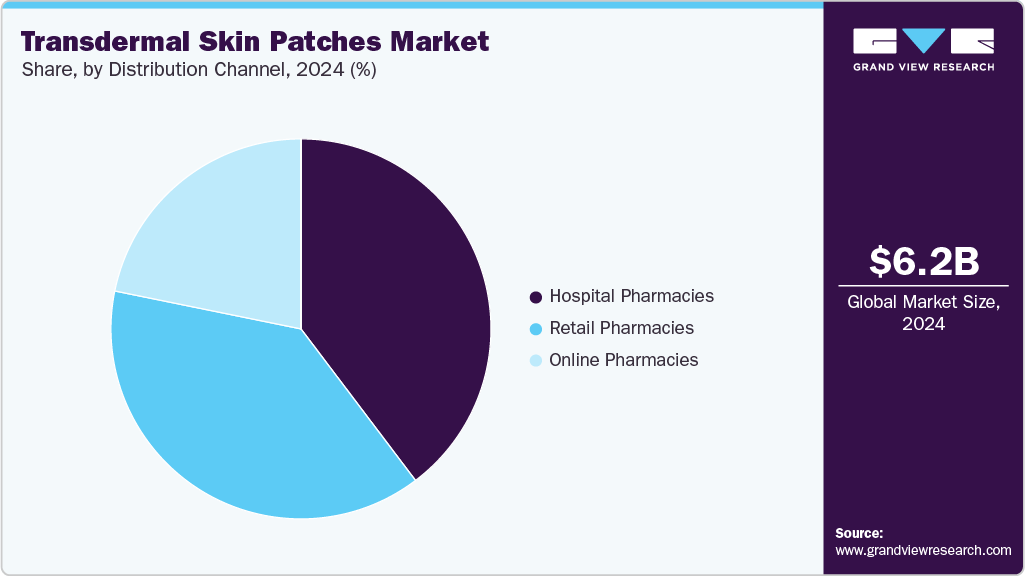
- Hospital Pharmacies Leading Distribution Channel: The hospital pharmacies segment held the largest share of 40% in 2024. Hospitals are key players in distributing medications, including transdermal patches, due to their high patient traffic and trusted medical expertise. Hospital pharmacies ensure that patients receive proper guidance on the usage of these patches, especially for complex treatments like hormone replacement therapy or pain management, making them a critical distribution channel for transdermal patches.
Market Size & Forecast
- 2024 Market Size: USD 6.20 Billion
- 2030 Projected Market Size: USD 9.55 Billion
- CAGR (2025-2030): 7.6%
- North America: Largest market in 2024
- Asia Pacific: Fastest growing market
Key Companies & Market Share Insights
The transdermal skin patches market is characterized by a competitive landscape, with key players employing strategies like product innovation, partnerships, and expansions to strengthen their market presence. Companies are actively working to enhance the accessibility of their products and services, with a particular focus on leveraging new technologies and distribution channels.
Key Players
- Teva Pharmaceutical Industries Ltd
- Novartis AG
- Teikoku Pharma USA Inc.
- Viatris Inc.
- Johnson & Johnson
- Luye Pharma Group
- Purdue Pharma Manufacturing LP
- Henan Lingrui Pharmaceutical Ltd
- Samyang Biopharmaceuticals Corp.
- Hisamitsu Pharmaceutical Co, Inc.
Explore Horizon Databook – The world's most expansive market intelligence platform developed by Grand View Research.
Conclusion
The global transdermal skin patches market is on an upward trajectory, driven by increasing chronic disease prevalence, the growing preference for less-invasive treatment options, and significant advancements in drug delivery technologies. North America remains the leading market due to its advanced healthcare system and high rates of chronic conditions. The multi-layer drug-in-adhesives segment, which offers superior drug delivery efficiency, is expected to remain the market leader. Additionally, the pain relief application continues to drive growth, as more patients seek convenient, long-lasting treatments for chronic pain. As innovations like microneedles and iontophoresis expand the possibilities of transdermal drug delivery, the market is poised for continued growth, offering more effective, patient-friendly alternatives to traditional treatments.