
Top Advantages of Using Plate Compactors in Construction
From small residential plots to large sites, plate compactors offer many types of advantages that improve construction quality, efficiency, and cost-effectiveness. Understanding these benefits highlights why plate compactors remain a preferred compaction solution across the industry.
Plate compactors are among the most commonly used machines in construction, paving, and landscaping projects. Their ability to efficiently compress soil, gravel, sand, and asphalt makes them essential for maintaining stable foundations and long-lasting surfaces. From small residential plots to large sites, plate compactors offer many types of advantages that improve construction quality, efficiency, and cost-effectiveness. Understanding these benefits highlights why plate compactors remain a preferred compaction solution across the industry.
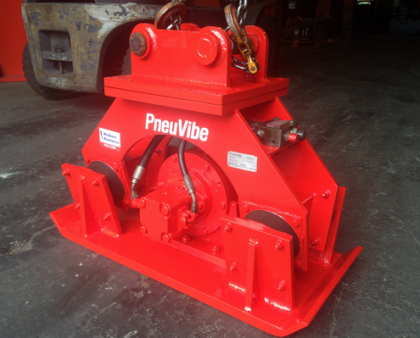
Improved Soil Stability and Load-Bearing Capacity
One of the primary advantages of using plate compactors is their ability to significantly improve soil stability. Loose or uncompacted soil contains air pockets that weaken its structure and reduce its ability to support weight. Plate compactors use vibration and downward force to eliminate these voids, increasing soil density.
This improved density enhances the load-bearing capacity of the ground, which is critical for supporting foundations, pavements, slabs, and structural elements. Proper compaction minimizes future settling, preventing cracks and uneven surfaces that can compromise structural integrity.
High Efficiency in Confined Spaces
Plate compactors excel in areas where larger compaction equipment, such as rollers, cannot operate. Their compact design allows them to work efficiently in trenches, around foundations, along curbs, and in narrow pathways.
This maneuverability makes plate compactors ideal for urban construction projects, utility work, and landscaping tasks. Operators can achieve consistent compaction in tight or obstructed areas without sacrificing performance, ensuring uniform ground preparation throughout the site.
Versatility Across Multiple Applications
Another major advantage of plate compactors is their versatility. They are effective on a wide range of materials, including sand, gravel, crushed stone, mixed soils, and asphalt. This makes them suitable for various construction activities such as road base preparation, driveway installation, patio and walkway construction, and pipe bedding.
Different plate sizes, weights, and vibration settings allow contractors to choose the right machine for specific tasks. Reversible plate compactors, in particular, provide added flexibility for large or deep compaction jobs.
Faster Project Completion
Time efficiency is a critical factor in construction, and plate compactors help accelerate project timelines. Their powerful vibration enables rapid compaction, reducing the number of passes needed to achieve the required soil density.
Compared to manual compaction methods, plate compactors significantly reduce labor time and effort. Faster compaction means crews can move on to the next construction phase sooner, improving overall productivity and reducing project delays.
Cost-Effective Construction Solution
Using plate compactors contributes to cost savings in multiple ways. Efficient compaction reduces the likelihood of future repairs caused by settling or structural failure. Preventing issues such as cracked concrete or uneven paving lowers long-term maintenance costs.
Plate compactors are also relatively affordable compared to larger compaction machinery. Their lower purchase price, reduced fuel consumption, and minimal maintenance requirements make them a cost-effective option for contractors and rental companies alike.
Consistent and Uniform Compaction Results
Achieving consistent compaction across a work area is essential for construction quality. Plate compactors provide uniform vibration and pressure, ensuring even density throughout the compacted surface.
This consistency is especially important for paving and foundation work, where uneven compaction can lead to weak spots and premature deterioration. Plate compactors help deliver reliable results that meet engineering and safety standards.
Ease of Operation and Reduced Operator Fatigue
Modern plate compactors are designed with user comfort and safety in mind. Ergonomic handles, vibration-dampening systems, and intuitive controls make them relatively easy to operate, even for extended periods.
Reduced vibration exposure minimizes operator fatigue and improves job-site safety. With minimal training, workers can operate plate compactors effectively, further enhancing productivity and reducing labor-related challenges.
Durability and Reliability on Job Sites
Plate compactors are built to withstand harsh construction environments. Heavy-duty steel plates, robust engines, and reinforced components ensure long service life even under demanding conditions.
Their reliability reduces downtime and maintenance interruptions, allowing projects to stay on schedule. Many models are designed for easy servicing, further extending their operational lifespan.
The advantages of using plate compactors in construction are clear. They improve soil stability, perform efficiently in confined spaces, and deliver versatile, consistent compaction across various materials. By increasing productivity, reducing costs, and enhancing long-term structural performance, plate compactors play a vital role in modern construction practices. Whether for small-scale residential work or large infrastructure projects, these machines provide a dependable and efficient solution for achieving high-quality ground preparation.