The Future of Weight Loss: Insights into the GLP-1 Agonists Market
The global GLP-1 agonist weight loss drugs market was valued at USD 13.84 billion in 2024 and is projected to reach USD 48.84 billion by 2030.
The global GLP-1 agonist weight loss drugs market was valued at USD 13.84 billion in 2024 and is projected to reach USD 48.84 billion by 2030, growing at a CAGR of 18.54% from 2025 to 2030. This rapid growth is driven by rising obesity rates, growing health awareness, and the proven clinical efficacy of drugs such as semaglutide (Wegovy, Ozempic) and tirzepatide (Mounjaro, Zepbound). Pharmaceutical innovations, favorable regulatory approvals, and expanding insurance coverage further support the adoption of these drugs. Additionally, celebrity endorsements and social media influence have increased consumer interest, expanding the market beyond diabetic patients to a broader population seeking weight management solutions.
Obesity continues to be a major global health concern. In 2022, 2.5 billion adults were overweight, including 890 million with obesity, while 37 million children under five were overweight. Poor diet, physical inactivity, and obesogenic environments are key contributors, though obesity is preventable through healthy eating, regular exercise, and lifestyle interventions. The World Health Organization (WHO) emphasizes global action to address obesity, including regulations on food marketing and targeted health interventions.
Global obesity prevalence varies widely, highlighting key market opportunities for GLP-1 agonist drugs. Countries with the highest rates, such as the United States (40.2%), Kuwait (43.75%), and Mexico (36.9%), represent significant growth potential. Gender-specific trends, such as South Africa’s 41.3% female obesity versus 15.3% male, indicate targeted demand for treatments. Conversely, lower rates in Japan (4.6%) and India (5.2%) suggest slower growth in these regions. In Europe, prevalence ranges from 10.4% in Italy to 20.1% in the UK, while in Asia, countries like South Korea report higher male obesity (36.3%) than female (27.6%), shaping regional demand for GLP-1 therapies.
In July 2024, China launched a public awareness campaign addressing obesity, noting that half of its adult population is overweight or obese. Spearheaded by the National Health Commission, the campaign emphasizes balanced diets, physical activity, quality sleep, and family support. With obesity closely linked to chronic diseases like cardiovascular conditions and diabetes, demand for effective pharmacological interventions, including GLP-1 agonists, is expected to grow. Government initiatives, such as "15-minute fitness circles" and updated dietary guidelines, further promote weight management, positioning GLP-1 drugs as complementary to lifestyle interventions.
Order a free sample PDF of the GLP-1 Agonists Weight Loss Drugs Market Intelligence Study, published by Grand View Research.
Key Market Trends & Insights
- Regional Dominance: North America led the GLP-1 agonists weight loss drugs market in 2024 with a revenue share of 75.50%. High obesity prevalence, coupled with increasing accessibility to GLP-1 drugs such as semaglutide (Wegovy), liraglutide (Saxenda), and tirzepatide (Zepbound), drives demand. Both parenteral and oral formulations are widely available through retail and hospital pharmacies.
- Drug Segment: Semaglutide (Wegovy) held the largest market share at 60.70% in 2024. Its growth is fueled by proven weight reduction efficacy, metabolic benefits, regulatory approvals, insurance coverage, and physician adoption. Rising global obesity and strong clinical trial outcomes further boost demand for semaglutide-based treatments.
- Route of Administration: Parenteral drugs dominated in 2024 with a 92.7% revenue share. Injectable formulations like semaglutide and tirzepatide provide high efficacy and bioavailability. Once-weekly dosing, auto-injector technology, and strong patient adherence drive this segment’s growth, supported by regulatory approvals and insurance coverage.
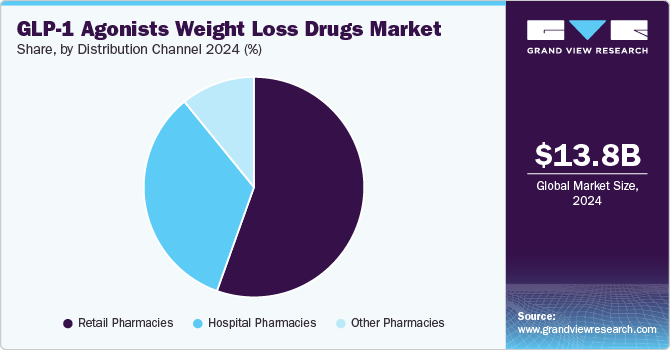
- Distribution Channel: Retail pharmacies accounted for the largest share at 55.46% in 2024. Growing consumer demand for accessible weight loss medications makes retail pharmacies a key channel. Expanded pharmacy services, including patient consultations, education, and home delivery, further enhance adoption of GLP-1 agonists.
Market Size & Forecast
- 2024 Market Size: USD 13.84 Billion
- 2030 Projected Market Size: USD 48.84 Billion
- CAGR (2025-2030): 18.54%
- North America: Largest market in 2024
Key Companies & Market Share Insights
Major players in the GLP-1 agonist weight loss drugs market include Novo Nordisk (Semaglutide), Eli Lilly (Tirzepatide), and other pharmaceutical leaders. These companies are focusing on increasing access to oral formulations, expanding distribution through hospitals and retail pharmacies, and investing in research and development to maintain competitive advantages.
Emerging companies are exploring personalized weight loss therapies tailored to individual patient needs. Novel delivery mechanisms, such as sublingual tablets and extended-release formulations, aim to offer convenient options, addressing unmet medical needs in markets with lower treatment access or where injectable therapies face adoption challenges.
Key Players
- Eli Lilly and Company
- Pfizer Inc.
- Novo Nordisk A/S
- Viking Therapeutics
- Structure Therapeutics
Explore Horizon Databook – The world's most expansive market intelligence platform developed by Grand View Research.
Conclusion
The GLP-1 agonists weight loss drugs market is poised for significant growth, driven by rising global obesity rates, proven clinical efficacy, and increasing health awareness. North America leads the market, supported by high prevalence and strong infrastructure, while emerging markets such as China present substantial growth opportunities. Key players, including Novo Nordisk and Eli Lilly, are innovating with new formulations, distribution channels, and personalized therapies, positioning GLP-1 agonists as a cornerstone in global obesity management and weight loss treatment strategies.