
Smart Office Spaces: How Technology Is Transforming Workplaces
As work becomes flexible and dynamic, coworking spaces that adapt quietly in the background are the ones that truly support productivity, comfort, and sustainability.
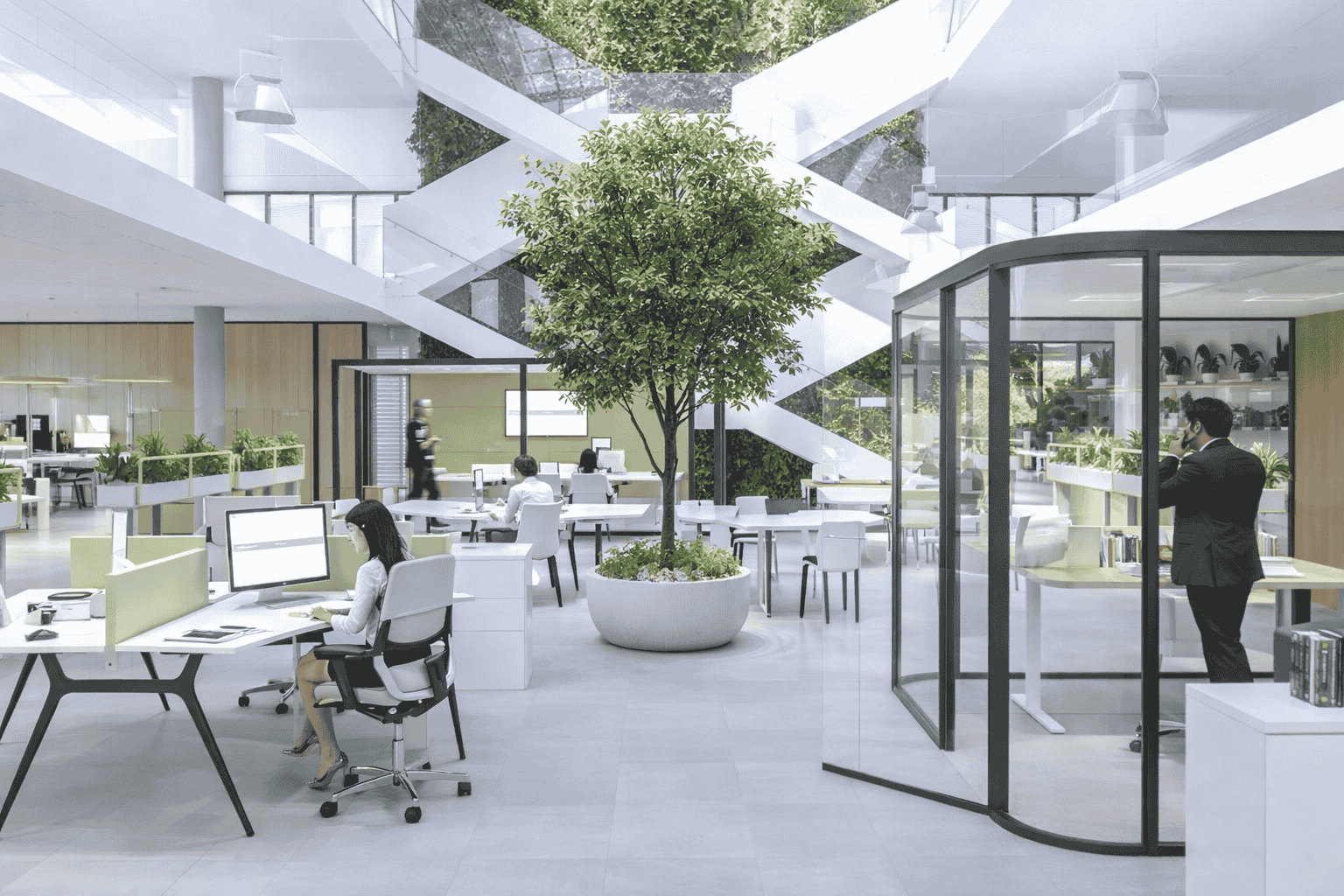 A few years ago, offices followed a rhythm that was predictable. Fixed desks. Fixed hours. Fixed routines.
People adjusted their workdays around the space.
Today, work no longer fits that structure. Teams work across locations and countries. Schedules change daily. Collaboration happens in short, focused moments rather than long meetings. Yet many workplaces still operate as if nothing has changed.
Lights stay on in empty rooms. Meeting spaces go unused. Comfort depends on manual controls.
This gap is why smart office spaces are becoming essential inside modern coworking spaces as we move into 2026.
Not as a feature.
Not as a trend.
But as an answer to how people actually work now.
From Static Offices to Adaptive Work Environments
Traditional offices expect consistency.
Smart office spaces expect change.
Instead of fixed systems, they use connected technologies to adjust lighting, temperature, access, and space usage based on real-time behavior. The workspace responds quietly, without asking users to intervene.
This matters even more in coworking spaces. Many teams share the same environment. Work hours overlap, and needs change throughout the day. Flexibility is no longer optional. It has become essential to daily operations.
According to the U.S. Department of Energy, smart building technologies can reduce energy consumption by 20 to 30% by aligning systems with actual occupancy rather than static schedules. That efficiency comes without sacrificing comfort.
In practice, coworking spaces run more smoothly throughout the day. Work areas feel ready as soon as people arrive. The environment stays calm and organized, and work starts without delays.
Smart office spaces work best when they stay in the background and allow people to focus on what truly matters.
How Data Is Reshaping Workspace Decisions
Office design used to rely on guesswork.
How many meeting rooms should we have?
Which areas will people actually use?
Which spaces might stay empty?
Smart office spaces change this approach.
Usage data shows when rooms are booked, how long they are used, and which areas are busiest during the day. Over time, clear patterns appear. Some spaces stay full. Others are barely used.
Studies from CBRE and JLL show that when workspaces are planned using real data, space usage can improve by 15 to 25%. This happens because layouts match how people actually work, not how we assume they do.
In coworking spaces, this leads to better decisions. Quiet areas turn into focus zones. Popular meeting rooms get improved or expanded. Private cabins grow where demand is higher.
This is not about tracking people.
It’s about understanding work habits.
When design follows real behavior, coworking spaces grow naturally with their community.
Why Productivity Improves When Friction Is Removed
Productivity rarely drops all at once.
It slowly decreases because of small, daily interruptions.
Searching for free meeting rooms.
Adjusting lights or temperature again and again.
Waiting to enter during busy hours.
Smart office spaces reduce these problems quietly. Automated room booking avoids clashes. Smart access systems handle peak times smoothly. Environmental controls keep the space comfortable without constant changes.
Research from the World Green Building Council and Harvard’s T.H. Chan School of Public Health shows that better lighting and temperature help people focus and think more clearly.
In coworking spaces, this balance is especially important. People need time to focus and moments to collaborate. Smart systems support both without creating distractions.
When people stop managing the workspace, they can put their energy back into their work.
Sustainability Becomes Part of Everyday Work
Sustainability works best when you don’t have to think about it.
Smart office spaces save energy automatically. Lights turn on only when people are around. Temperature adjusts based on how full the space is. Energy is used only when it’s needed, not based on fixed assumptions.
The International Energy Agency consistently highlights that intelligent energy management systems play a major role in reducing commercial building emissions without changing user behavior.
For coworking spaces operating at scale, this matters. Lower waste. Predictable costs. Responsible operations that align with long-term goals.
Members don’t need to think about sustainability for it to work.
The system handles it quietly.
That’s how sustainable workplaces actually last.
Why Coworking Spaces Are Leading the Smart Office Shift
Coworking spaces are built for movement.
Teams grow. Projects change. Memberships scale up and down.
This constant motion makes coworking spaces ideal for smart office adoption. Smart systems support change better than rigid office models ever could.
Industry reports from CBRE and Statista show that coworking spaces adopt smart building technologies faster than traditional offices because flexibility is already part of their operating model.
At Karma Workspaces, smart office spaces support shared workspaces, private cabins, and meeting rooms with consistency. The environment stays professional, comfortable, and ready regardless of who walks in.
Coworking spaces don’t just use smart offices.
They demonstrate what adaptive work environments should feel like.
Practical Takeaways for Choosing the Right Workspace
- Choose coworking spaces that adjust based on how people actually use them
- Prefer smart office spaces that make work easier, not more complicated
- Ask how data helps improve the work experience
- Pick spaces that support both productivity and sustainability
- See smart systems as support in the background, not something you have to manage
Looking Ahead
Smart office spaces are not about adding more technology.
They are about changing and removing things that are slowing people down.
As work moves beyond 2026, the question is no longer whether offices should be smarter.
It is whether they support how people really work today.
The future of coworking spaces belongs to environments that listen, adapt, and stay reliable as work continues to change.
The smartest spaces are the ones you hardly notice.
Everything just works