Rigging Equipment Inspection: What to Check Before Every Lift
Learn what to check before every lift, why inspections matter, and how smart routines improve safety, reliability, and long term value on site.
Lifting work rewards preparation and punishes shortcuts. Before any load leaves the ground, a simple inspection routine can prevent delays, damage, and injuries. At its core, a pre lift check is about confidence. When we know our gear is ready, the crew can focus on the job instead of second guessing the setup. This guide walks through what to check, why it matters, and how good habits turn into long term value for your site. We will also show how thoughtful choices improve comfort, ease of use, and the overall customer experience. And yes, we will keep it practical. This starts with treating rigging equipment as a system, not a pile of parts.
Why inspections matter more than ever
Sites move faster today. Timelines are tighter, teams are leaner, and expectations for safety and reliability are higher. A quick visual once over is no longer enough. Small defects can become big problems when loads are heavy and spaces are tight. Inspections protect people first, but they also protect schedules, budgets, and reputations. They support quality by catching wear early. They support comfort because crews work better when they trust the tools in their hands. They support customer experience because fewer surprises mean smoother projects.
There is also a mindset shift happening. Clients expect proof of care, not just results. Documented checks and clear procedures show that a business takes responsibility seriously. That builds trust long before the lift starts.
Start with the load and the plan
Before touching any hardware, confirm the basics. What is the load weight, shape, and center of gravity. How will it be lifted, moved, and set down. Does the plan match the actual conditions on site today. Weather, access, and nearby work can change the picture.
This step supports versatility. A well planned lift adapts to different tasks without forcing the gear to do something it was not meant to do. It also supports ease of use. When the plan is clear, the setup is simpler and faster, and there is less temptation to improvise.
Check slings, chains, and ropes for visible damage
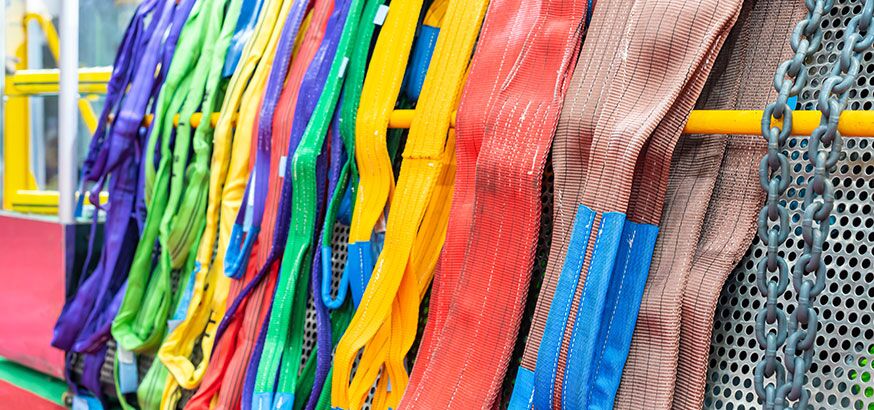
This is the heart of the inspection. Look for cuts, fraying, crushed sections, kinks, corrosion, stretched links, and broken wires. Run your hands along the length if it is safe to do so, and feel for stiff spots or thinning. Check end fittings and splices closely.
Quality shows up here. Good products age better, but nothing lasts forever. If anything looks off, tag it out. The cost of replacing a worn item is small compared to the cost of a failed lift. This also ties to comfort. Crews who know they can reject questionable gear without pressure work with more confidence and less stress.
Inspect hooks, shackles, and connectors
These parts take a lot of abuse and they often hide damage. Check for cracks, deformation, worn pins, and bent latches. Make sure threads run smoothly and pins seat fully. A hook that does not close properly or a shackle that will not align is telling you something.
This is also about customer experience. A site that runs clean gear and smooth connections looks professional. It reduces setup time and avoids those small delays that add up over a week of lifts.
Look at identification and capacity markings
Tags and markings are not decoration. They tell you what the gear can handle and how it should be used. If tags are missing or unreadable, treat the item as unknown and remove it from service. Guessing has no place in lifting work.
Here is where rigging equipment becomes more than metal and fiber. It becomes information. Clear markings support ease of use and training. New team members can learn faster, and experienced hands can double check at a glance.
Think about fit, handling, and crew comfort
Comfort might not be the first word that comes to mind on a worksite, but it matters. Gear that is awkward, heavy, or hard to adjust invites shortcuts. Check that slings are the right length, that connection points are accessible, and that nothing forces the crew into unsafe positions.
This also improves long term value. When people are not fighting the tools, there is less accidental damage and less wear from misuse. The gear lasts longer, and the work stays consistent.
Consider the environment and sustainability
Heat, moisture, chemicals, and dust all change how materials behave. An inspection should include a quick reality check against today’s conditions. Is there extra risk of corrosion, abrasion, or heat damage. Do we need a different setup for this job.
Thoughtful decision making here supports sustainability in a practical way. Using the right tool for the right environment reduces waste, extends service life, and cuts down on emergency replacements. It is not about slogans. It is about choosing well and maintaining what you already have.
Keep records and build a routine
A checklist turns good intentions into habits. Short, consistent inspections catch more issues than occasional deep dives. Records also help you spot patterns, like a certain task that wears gear faster, or a storage area that causes damage.
This is where changing customer expectations show up. More clients want to see proof of process. Being able to say, and show, that every lift starts with the same checks builds confidence and sets you apart.
Bringing it all together
A pre lift inspection is not a delay. It is part of the job. It protects quality, supports comfort and ease of use, improves the customer experience, and delivers long term value through fewer failures and longer service life. When we treat rigging equipment with the attention it deserves, we also show respect for the people who rely on it and the projects that depend on it. At the end of the day, that mindset is what we stand for at HES Cranes.