Mansard Roof Types
If you’re wondering what is a mansard roof, or trying to understand the different mansard roof types, this guide comes from real projects, real budgets, and real lessons learned the hard way.
Different Mansard Roof Types and How to Choose the Right One
I’ve worked on mansard roofs on and off for nearly two decades, mostly during restorations of older urban buildings and high-end custom homes. Every time I step onto one, I’m reminded that this roof style isn’t just about looks. It’s about space, history, and smart design choices that still matter today.
If you’re wondering what is a mansard roof, or trying to understand the different mansard roof types, this guide comes from real projects, real budgets, and real lessons learned the hard way.
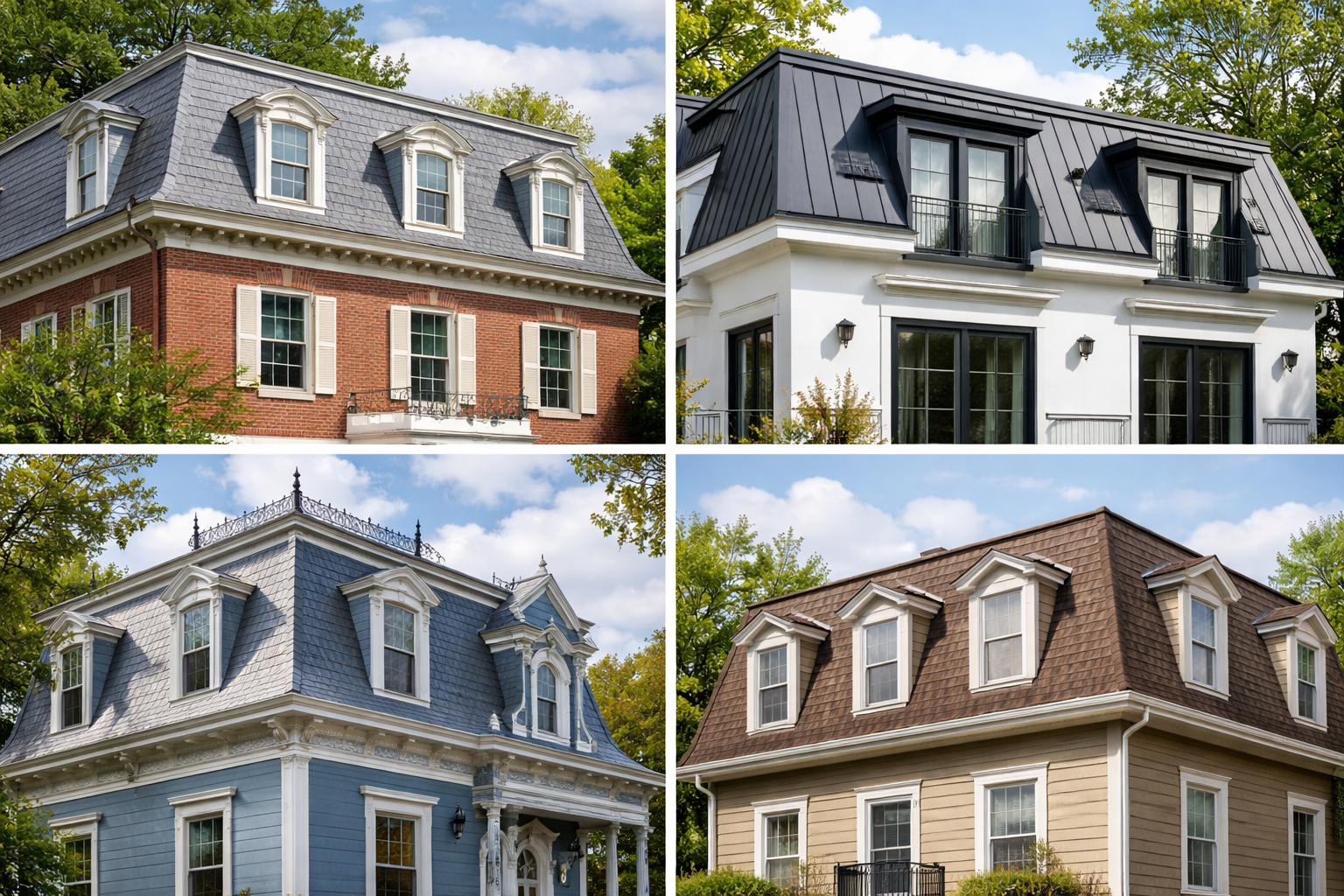
What Is a Mansard Roof, Really?
A mansard roof is a four-sided roof with two slopes on each side. The lower slope is steep, almost vertical, while the upper slope is much flatter.
This design originated in France, but it’s still used worldwide. The goal has always been the same: maximize usable interior space without increasing the building’s footprint.
Why Mansard Roofs Still Matter Today
I’ve seen plenty of homeowners dismiss mansard roofs as “old-fashioned.” Then they step inside a mansard roof house and see the headroom.
That steep lower slope creates full-height living space. In dense cities, that extra square footage can be a game changer.
Classic Mansard Roof Types I’ve Worked On
Not all mansard roofs are the same. Over the years, I’ve worked with several distinct mansard roof types, each with its own strengths.
Understanding these differences helps you choose the right roof, not just the prettiest one.
Straight Mansard Roof
The straight mansard is the most traditional form. The lower slope runs straight down with no curve.
I’ve installed this style on historic renovations where preservation mattered. It’s simpler to frame and usually more affordable than curved designs.
Convex Mansard Roof
A convex mansard roof curves outward at the lower slope. It’s elegant and dramatic.
I once worked on a boutique hotel with this design. It looked stunning, but the craftsmanship required was intense, which drove up the mansard roof cost noticeably.
Concave Mansard Roof
The concave style curves inward, giving the building a slightly softer profile.
These are less common, but I’ve seen them used effectively on upscale residential mansard roof houses where aesthetics were the priority.
Mansard Flat Roof Combination
Many modern designs blend a mansard with a flat upper section, often called a mansard flat roof.
From a contractor’s perspective, this hybrid design works well. It allows modern drainage systems while keeping the classic exterior appearance.
Mansard Roofs on Commercial Buildings
Most people associate mansard roofs with homes, but they’re extremely common on commercial buildings.
Shopping centers and offices use mansard roofs to hide rooftop equipment. I’ve installed countless retrofit systems for this exact purpose.
Structural Considerations You Shouldn’t Ignore
Mansard roofs place more load on exterior walls than standard roof designs.
On older buildings, I always recommend a structural assessment. I’ve seen cracked masonry simply because the roof weight wasn’t properly supported.
Mansard Roof Cost: What You’re Really Paying For
Let’s talk honestly about mansard roof cost, because this is where many homeowners get surprised.
Materials, labor, flashing complexity, and finish details all add up. In my experience, mansard roofs cost 20–40% more than standard pitched roofs.
Long-Term Value vs Upfront Cost
While the initial cost is higher, the added living space can offset it.
One client converted a mansard attic into a rental unit. That roof paid for itself in under five years.
Choosing Materials for Mansard Roof Types
Slate, shingles, metal, and synthetic tiles are all common choices.
I personally favor architectural shingles for budget-conscious projects and slate for historic restorations. Material choice affects both durability and maintenance.
Mansard Roof Houses and Interior Space
This is where mansard roofs truly shine.
I’ve helped homeowners transform cramped attics into full bedrooms, offices, even studios. That steep slope gives you walls instead of awkward angles.
Drainage and Waterproofing Challenges
Water management is critical on mansard roofs.
The flatter upper slope needs excellent drainage. I’ve repaired many leaks caused by poorly designed internal gutters. Cutting corners here always backfires.
Maintenance Realities of Mansard Roofs
Mansard roofs require more inspections than simpler designs.
Because of multiple slopes and details, small issues can hide easily. I recommend annual inspections, especially after heavy storms.
Climate Considerations When Choosing Mansard Roof Types
Climate matters more than style.
In snowy regions, I advise steeper upper slopes to shed snow. In hot climates, reflective materials help reduce heat gain significantly.
Modern Mansard Roofs vs Traditional Designs
Modern mansard roof types often simplify details to reduce cost.
I’ve seen excellent results with clean lines and modern materials. You can respect the form without replicating every historical detail.
Common Mistakes Homeowners Make
The biggest mistake is choosing style over structure.
I’ve had clients insist on ornate designs without budgeting for proper support. That almost always leads to compromises later.
Case Study: Restoring a 1920s Mansard Roof
One of my favorite projects was restoring a 1920s brick building with original mansard detailing.
We preserved the shape but upgraded materials and insulation. The building retained its charm while performing like a modern structure.
Is a Mansard Roof Right for You?
Ask yourself what you value most: space, style, or simplicity.
If usable space and architectural character matter, mansard roofs are hard to beat. If budget and minimal maintenance are priorities, simpler roofs may suit you better.