
How Custom Healthcare Software Development Improves Operational Efficiency?
Discover how custom healthcare software development improves operational efficiency by automating workflows, streamlining patient management, and reducing costs.
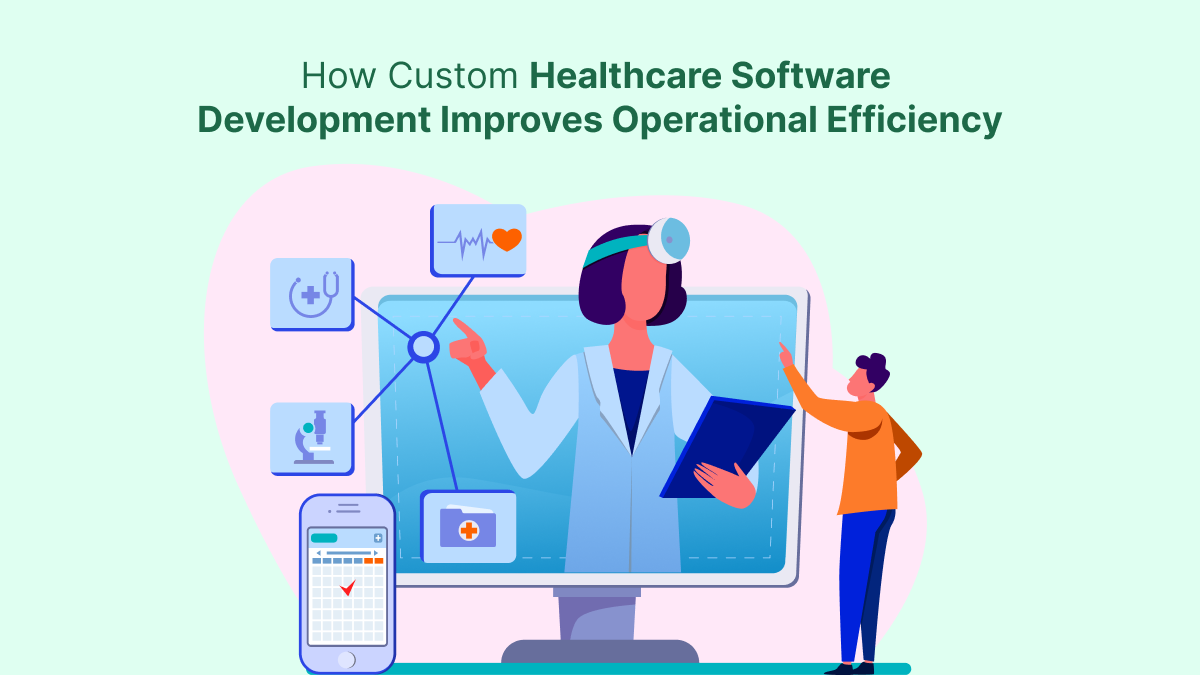
The healthcare industry is constantly evolving, and technology plays a crucial role in shaping its future. Among the many technological advancements, custom healthcare software development stands out as a key driver for improving operational efficiency. Hospitals, clinics, and healthcare providers are increasingly turning to tailor-made software solutions to manage their complex workflows, reduce errors, and provide better patient care.
This blog will explain how custom healthcare software development can transform healthcare operations. We’ll explore the specific ways it enhances efficiency, reduces costs, and streamlines processes. Whether you manage a small clinic or a large hospital system, understanding these benefits can help you make smart decisions for your organization.
Why Operational Efficiency Matters in Healthcare
The Challenges Healthcare Providers Face
Healthcare providers deal with many challenges—managing patient data, scheduling appointments, coordinating between departments, ensuring regulatory compliance, and handling billing, among others. These tasks are often time-consuming and prone to human error, which can impact patient outcomes and operational costs.
Inefficient workflows can lead to delays, wasted resources, and staff burnout. Improving operational efficiency is not just about cutting costs; it’s about improving the quality of care while making the system more sustainable.
The Role of Technology
Technology, especially software solutions, can automate repetitive tasks, provide better data visibility, and support collaboration among healthcare professionals. Custom software solutions are particularly effective because they can be designed to meet the exact needs and challenges of a healthcare organization.
What Is Custom Healthcare Software Development?
Custom healthcare software development involves building software applications specifically tailored to the needs of a healthcare provider. Unlike off-the-shelf software, which offers generic features, custom software is designed to fit the unique workflows, processes, and regulatory requirements of an organization.
Custom solutions can include modules for electronic health records (EHR), appointment management, billing, telemedicine, patient portals, and more. Because they are tailored, they can integrate seamlessly with existing systems and provide a more cohesive user experience.
How Custom Healthcare Software Improves Operational Efficiency
1. Streamlining Patient Data Management
Managing patient information efficiently is critical for healthcare providers. Custom software enables centralized storage and easy access to patient data such as medical history, lab results, prescriptions, and treatment plans.
This eliminates the need for paper records or fragmented systems, reducing errors and saving time. Doctors and nurses can retrieve accurate patient information instantly, leading to faster diagnoses and treatments.
2. Automating Appointment Scheduling
Manual appointment scheduling can be a major source of delays and miscommunication. Custom healthcare software automates this process by allowing patients to book appointments online based on doctor availability.
The system can send automated reminders to patients, reducing no-shows and improving clinic utilization. It also helps staff manage their calendars more effectively, avoiding overbooking or scheduling conflicts.
3. Enhancing Communication and Collaboration
Effective communication between departments and healthcare professionals is vital for smooth operations. Custom software provides secure messaging, shared calendars, and real-time updates to keep everyone in the loop.
For example, labs can notify doctors when test results are ready, and nurses can update patient charts in real-time. This reduces delays and ensures that care teams work in sync.
4. Reducing Administrative Workload
Many healthcare providers spend significant time on administrative tasks like billing, claims processing, and compliance reporting. Custom software automates much of this work, freeing up staff to focus more on patient care.
Automated billing systems generate invoices, verify insurance coverage, and submit claims electronically. Compliance modules help track regulatory requirements and generate necessary reports, reducing the risk of penalties.
5. Integrating Telemedicine Capabilities
The rise of telemedicine has made virtual consultations a necessity. Custom software can incorporate secure video conferencing, patient chat, and online prescription management to support remote care.
This not only improves patient access but also reduces the pressure on physical facilities. Telemedicine tools help healthcare providers reach more patients without adding operational complexity.
6. Real-Time Analytics and Reporting
Custom software can provide healthcare administrators with dashboards and reports that offer insights into operational metrics such as patient wait times, staff performance, billing efficiency, and more.
These data-driven insights enable better decision-making, identify bottlenecks, and help optimize resource allocation. By knowing what’s working and what isn’t, healthcare providers can continuously improve their processes.
7. Ensuring Compliance and Security
Healthcare data is highly sensitive and subject to strict regulations like HIPAA. Custom software is designed with security features such as encryption, role-based access, and audit trails to protect patient privacy and ensure compliance.
This reduces the risk of data breaches and builds trust among patients and regulators.
8. Supporting Scalability and Integration
As healthcare organizations grow or adopt new technologies, their software needs to adapt. Custom solutions are built to be scalable and flexible, allowing the addition of new modules or integration with third-party systems like laboratory equipment or pharmacy databases.
This flexibility avoids the costly and disruptive process of switching systems as needs evolve.
Read more: Ultimate Guide to Healthcare Software Development Consultation Services
Real-World Examples of Improved Efficiency
- Hospitals using custom EHR software have reported faster patient admissions, improved coordination between departments, and reduced paperwork.
- Clinics with automated appointment systems have seen a significant drop in no-shows and better utilization of doctors’ time.
- Healthcare providers incorporating telemedicine can serve more patients remotely, reducing waiting times and travel burdens for patients.
- Organizations leveraging analytics can pinpoint inefficiencies such as bottlenecks in patient flow and optimize staffing schedules accordingly.
Why Partner with an On Demand App Development Company?
Building a custom healthcare software solution requires technical expertise and a deep understanding of healthcare workflows. Partnering with an on demand app development company provides access to skilled developers who can deliver tailored solutions quickly and cost-effectively.
These companies specialize in flexible, scalable software development that can meet your unique operational needs while complying with healthcare regulations. They also offer ongoing support and updates, ensuring your software keeps pace with changes in technology and healthcare standards.
Conclusion
Operational efficiency is crucial for healthcare providers who want to offer high-quality care while managing costs and resources effectively. Custom healthcare software development offers powerful tools to streamline workflows, reduce errors, enhance communication, and support data-driven decision-making.
By building software tailored to your specific processes and challenges, you create a foundation that supports growth, improves patient outcomes, and keeps your organization competitive. Collaborating with an experienced on demand app development company ensures that your software solution is designed, developed, and maintained with the flexibility and expertise needed for today’s dynamic healthcare environment.
FAQs
How does custom healthcare software differ from off-the-shelf solutions? Custom software is specifically designed to meet your organization’s unique workflows and requirements, while off-the-shelf solutions offer general features that may not fit all your needs.
Can custom healthcare software help with regulatory compliance? Yes, custom solutions are built with security and privacy features tailored to meet regulations like HIPAA, ensuring your data handling meets legal standards.
Is it possible to integrate custom software with existing systems? Absolutely. Custom healthcare software is often designed to integrate smoothly with existing platforms such as EHRs, billing systems, or lab databases.
How long does it typically take to develop custom healthcare software? Development time varies depending on complexity, but partnering with an experienced development company can streamline the process and deliver a functional solution in months.
Can custom healthcare software scale as my organization grows? Yes, custom solutions are designed with scalability in mind, allowing you to add new features, support more users, or expand to new locations without major disruptions.