Firestone EPDM Rubber Roofing Installation
I still remember my first Firestone EPDM rubber roofing installation job back in 2011. It was a small commercial flat roof, nothing fancy.
How Firestone EPDM Rubber Roofing Installation Improves Roof Durability
I still remember my first Firestone EPDM rubber roofing installation job back in 2011. It was a small commercial flat roof, nothing fancy. But when I inspected that same roof twelve years later, the membrane was still flexible, sealed, and performing like it had plenty of life left. That sold me on EPDM for good.
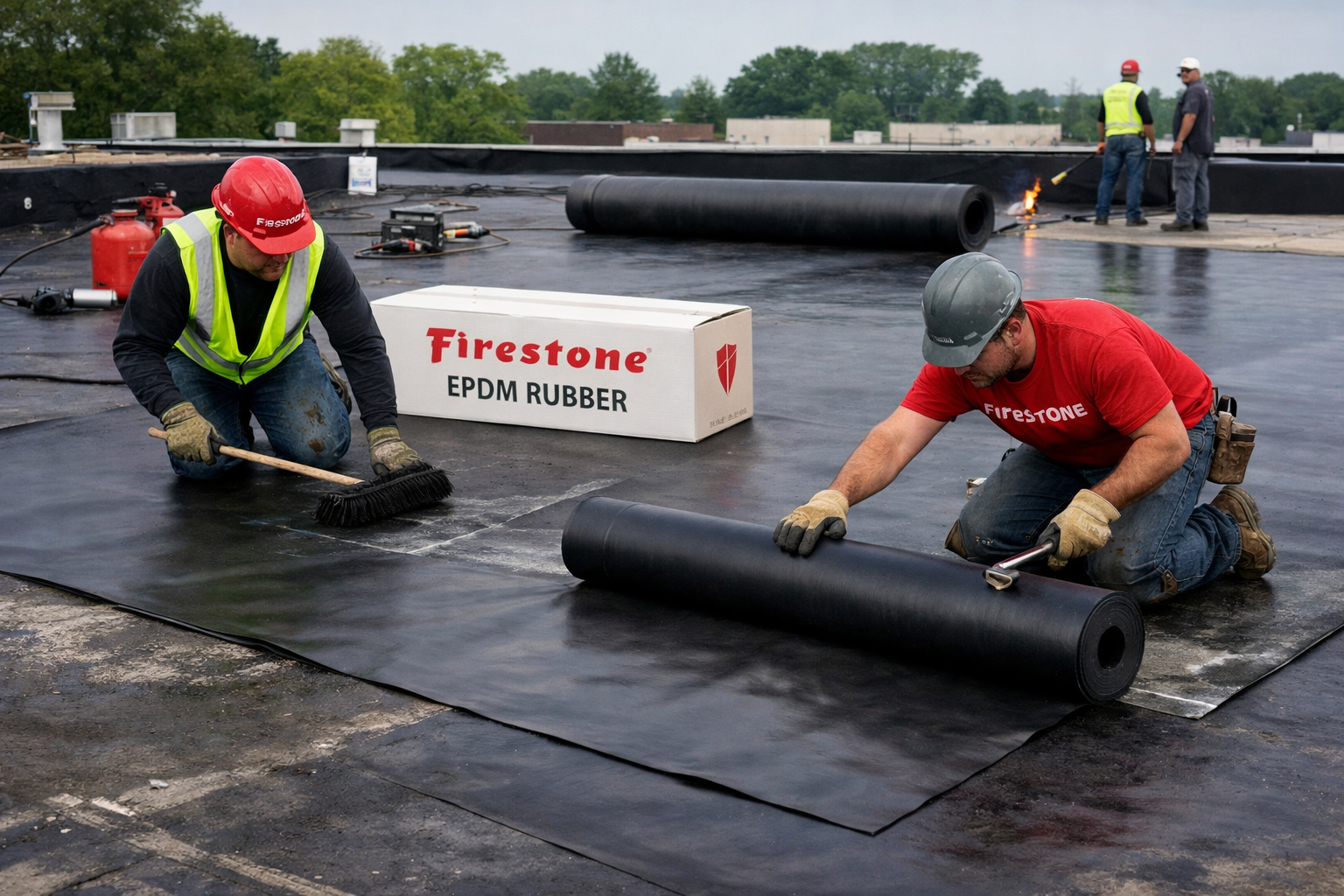
Roof durability isn’t marketing hype. It’s earned through proper materials, correct prep, and disciplined installation. When done right, Firestone EPDM simply outlasts most flat roofing systems I’ve worked with.
Why Firestone EPDM Is Built for Longevity
EPDM rubber is engineered to stretch, shrink, and recover without cracking. That elasticity is crucial on flat roofs where temperature swings are brutal.
I’ve seen asphalt systems fail within eight years. Meanwhile, EPDM keeps moving instead of breaking. That’s the core reason epdm rubber roofing installation improves long-term durability.
My Real-World Take on EPDM vs Other Flat Roof Systems
I’ve installed TPO, modified bitumen, and built-up roofs. Each has its place. But EPDM is the most forgiving.
On one warehouse job, thermal movement tore a rigid membrane within two seasons. The adjacent EPDM roof? Zero damage. That flexibility matters more than specs on paper.
How to Fit EPDM Roof: Preparation Makes or Breaks It
Before anyone asks how to fit EPDM roof, I always start with the deck. Clean, dry, and smooth isn’t optional—it’s mandatory.
Any debris left behind will telegraph through the membrane later. I learned that lesson early after a screw head wore through EPDM over time.
EPDM Roofing Installation Details Most Installers Skip
The small stuff is where durability is won or lost. Proper adhesive flash-off time is critical.
When applying EPDM rubber roofing, rushing the glue causes weak bonds. I wait until it’s tacky, not wet. That patience pays off years later.
Fitting EPDM Roof Correctly at Seams and Edges
Seams are the stress points. Firestone’s seam tape system, when used correctly, is incredibly reliable.
I roll seams twice, sometimes three times. It’s boring work, but seam failures are almost always installer error, not material failure.
Installing Rubber Roof Systems in Real Conditions
Textbooks assume perfect weather. Job sites don’t.
I’ve handled installing rubber roof systems in wind, heat, and sudden cold snaps. EPDM handles these conditions better than most membranes, as long as adhesives are temperature-appropriate.
Firestone EPDM Rubber Roofing Installation on Flat Roofs
A rubber flat roof installation benefits hugely from EPDM’s resistance to ponding water.
I manage a maintenance contract where standing water exists year-round. After nine years, the EPDM shows no degradation. That’s not theory—it’s real-world performance.
Installing EPDM Rubber Roofing on Residential Projects
Residential flat roofs demand quiet, clean installs. Homeowners notice everything.
When installing EPDM rubber roofing, I appreciate that EPDM doesn’t require torches or hot asphalt. Safer installs mean fewer risks and better outcomes.
How to Fit EPDM Roof Around Penetrations
Pipes, drains, and skylights are where leaks love to start.
I always use pre-formed Firestone boots when possible. Custom field wraps work too, but factory components dramatically increase lifespan and reliability.
EPDM Install Process That Maximizes Durability
A proper EPDM install follows a sequence: layout, relax membrane, adhere, detail, then inspect.
Skipping the relaxation phase causes wrinkles later. I’ve watched rushed crews pay for that mistake within a year.
Installing EPDM on Large Commercial Roofs
Large-scale installing EPDM projects require discipline and planning.
On a 40,000-square-foot job, we staged membrane rolls carefully to avoid stretching. That attention kept seams aligned and stress-free long term.
Applying EPDM Rubber Roofing Adhesive the Right Way
Adhesive coverage must be even. Heavy spots don’t improve strength; they create bubbles.
I use notched rollers religiously. That consistency ensures the membrane bonds evenly and ages uniformly.
Firestone EPDM Rubber Roofing Installation and UV Resistance
UV exposure destroys many roofing materials. EPDM thrives under it.
I’ve cut test samples from old roofs. The surface oxidation is minimal, and the rubber beneath remains elastic. That UV resistance is a durability game-changer.
Long-Term Maintenance and EPDM Roofing Installation Details
Even the best roof benefits from inspections.
I advise clients to check seams and drains annually. Minor touch-ups extend life significantly. That’s how EPDM roofs reach 30+ years.
Case Study: EPDM Roof After 15 Years
One of my earliest firestone epdm rubber roofing installation projects was a medical office.
At year fifteen, core samples showed no membrane fatigue. The roof still passed adhesion tests. That’s not common with many flat roof systems.
Common Mistakes That Reduce EPDM Roof Durability
Poor substrate prep tops the list.
Second is improper seam pressure. Third is ignoring temperature guidelines. Every EPDM failure I’ve investigated traced back to installer shortcuts.
Why Firestone EPDM Outperforms Generic EPDM
Not all EPDM is created equal.
Firestone’s formulation and accessories integrate better. I’ve mixed systems before, and the failure rates increase noticeably. Compatibility matters.