
Electronics Recycling Methods for Responsible Disposal
Responsible electronics recycling methods ensure safe disposal of e-waste by recovering valuable materials, preventing toxic pollution, and protecting the environment.
The moment usually comes quietly. The drawer won’t close anymore. A phone charger no longer fits anything you own. An old laptop sits powered off, but not forgotten. Decisions about electronics recycling rarely feel urgent, yet they carry more weight than most people realize.
In the U.S., electronic devices age quickly. Replacement cycles are short. Storage fills up faster than disposal plans. What seems like a small personal choice can have a big effect, and the ways we get rid of electronics are more important than they seem at first.
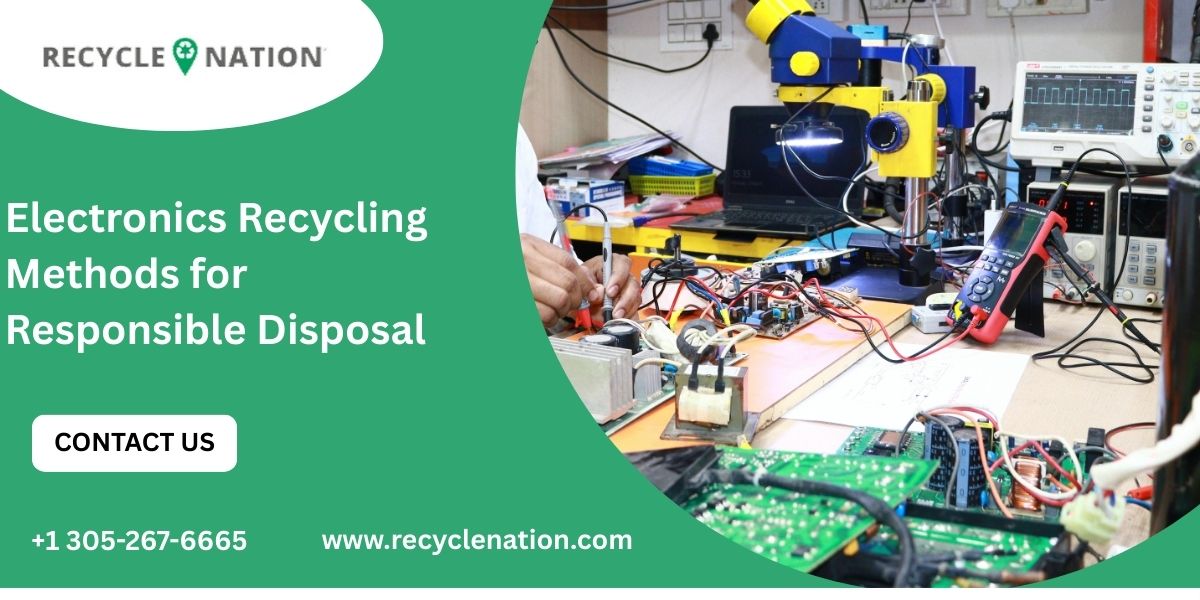
Responsible electronics recycling begins with understanding what’s at stake
People often think of recycling electronics as a way to clean up. In reality, it is a decision about risk management that has to do with health, resources, and responsibility.
Electronic waste disposal is not just another trash problem
Electronic waste contains lead, mercury, lithium, and other materials. That behaves differently from household trash. If you throw these things away the wrong way, they can leak into the water systems. It is easy to ignore because that damage does not happen right away.
A lot of electronic waste in the U.S. still ends up in landfills or is sent to other countries. The damage happens slowly, far from where the item was thrown away.
Recycling electronic devices protects more than the environment
Old electronics also carry data. Hard drives, memory chips, and embedded storage can retain personal and business information long after devices stop working. Secure recycling methods address both material recovery and data destruction.
This dual risk environmental and informational is why electronics recycling requires specialized handling.
The gap between awareness and action remains wide
Most people know electronics shouldn’t go in the trash. Fewer know where to take them. Recycling news regularly highlights rising e-waste volumes, but access and clarity still lag behind awareness.
That gap shapes disposal habits more than intention does.
Different electronics recycling methods reflect different priorities
Not all recycling options are equal. The method chosen often reveals what the system values most convenience, recovery, or compliance.
Certified recycling centers focus on controlled processing
Certified recyclers follow rules for taking things apart, sorting materials, and keeping track of waste. These places are made to safely handle dangerous materials while getting back metals and parts.
Organizations like RecycleNation collect information about local certified options to help people and businesses find their way through a confusing landscape. Their role shows a bigger truth: intention is just as important as access.
Manufacturer take-back programs reduce uncertainty
A lot of companies that make electronics have programs where you can send them back or recycle them. These programs make things easier and lower the chance of mistakes. They also shift responsibility upstream, closer to where products were designed.
The limitation is scope. Not all devices qualify, and not all consumers know these programs exist.
Community collection events trade convenience for scale
Local collection days and drop-off events create short windows for large-volume recycling. They work well for clearing accumulated devices but rely on timing and awareness.
These events often appear in recycling news cycles, surge briefly, then fade effective, but intermittent.
Recycling old electronics is increasingly about design, not disposal
As devices become more complex, recycling methods struggle to keep up. The problem is moving earlier in the product lifecycle.
Modern devices are harder to dismantle
Recycling electronic devices takes more work. As they have smaller parts, sealed batteries, and mixed materials. It used to be easy to take apart, but now it takes special tools and time. This lowers recovery rates and raises costs.
Repair and reuse delay the recycling decision
One of the best ways to cut down on waste is still to make devices last longer. Repairing, reselling, and donating things slow down the flow of things into recycling streams, giving time for better systems to be made. But reuse does not last forever.
Electronics recycling remains a long-term systems challenge
Despite growing awareness, electronics recycling still operates unevenly across regions and income levels. Access, education, and infrastructure remain inconsistent.
The reality is that no single method solves electronic waste disposal entirely. Certified recyclers, manufacturer programs, community events, and reuse all play partial roles. Each fills a gap the others leave behind.
What’s changing is not the existence of electronics recycling, but expectations around responsibility. Disposal is no longer just about getting rid of something. It’s about choosing where the impact lands on communities, ecosystems, or supply chains.
That choice rarely feels dramatic at the moment. It happens quietly, when a drawer finally gets cleaned out. Over time, those quiet decisions shape what responsible disposal actually looks like.