Artificial Flowers Market 2030: Trends That Will Last a Lifetime
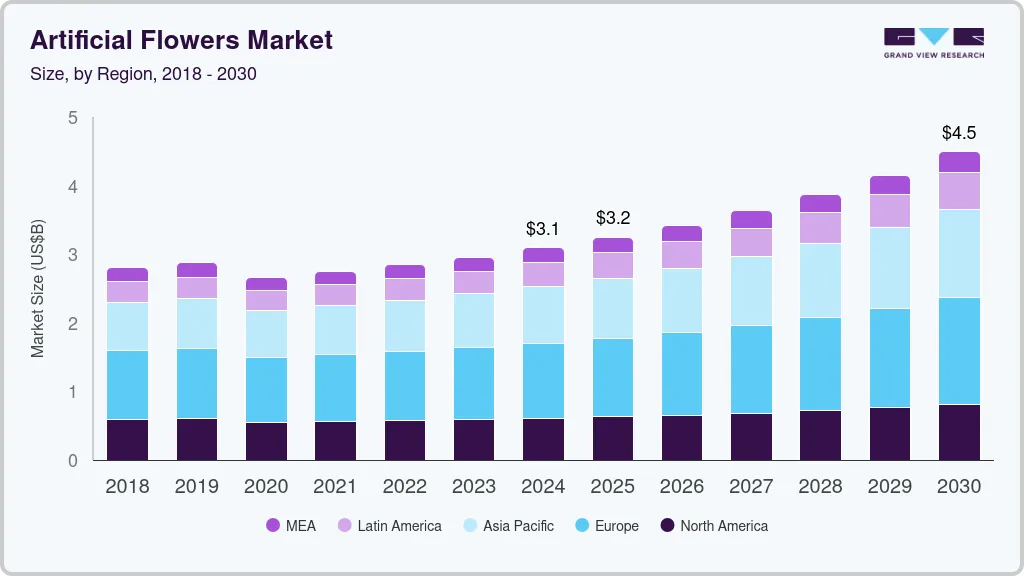
The global artificial flowers market was valued at USD 3.09 billion in 2024 and is projected to reach USD 4.49 billion by 2030.
The global artificial flowers market was valued at USD 3.09 billion in 2024 and is projected to reach USD 4.49 billion by 2030, growing at a CAGR of 6.7% from 2025 to 2030. This growth is primarily driven by the increasing demand for low-maintenance and long-lasting décor items, particularly in commercial spaces and households.
Advancements in technology have significantly enhanced the production of highly realistic and visually appealing artificial flowers, further accelerating market expansion. The availability of artificial flowers in a wide range of shapes, sizes, and colors, catering to diverse consumer preferences, has also contributed to this growth. As home décor trends evolve, artificial flowers are becoming increasingly popular for their aesthetic appeal and practicality.
The artificial flowers industry is gaining substantial traction, especially in home décor. In June 2022, UK-based arts and crafts retailer Hobbycraft reported an 8% increase in sales of faux flowers compared to 2021. Similarly, in October 2021, major retailers such as Tesco and Amazon reported significant sales growth in artificial flowers, further reinforcing the market’s upward trajectory. In October 2024, Tesco noted a nearly 25% rise in demand for its Finest bouquets compared to 2023, resulting in the sale of half a million more bouquets. MM Flowers, the primary supplier to Tesco, also saw a 10% growth in volume, translating to over five million additional bouquets annually.
The cost-effectiveness and convenience of faux flowers, along with their ability to eliminate the need for frequent replacements and maintenance associated with real flowers, remain a key driver of this market. Additionally, the trend is expanding beyond traditional vase displays, with a growing emphasis on incorporating artificial flowers into wreaths and other creative arrangements.
Order a free sample PDF of the Artificial Flowers Market Intelligence Study, published by Grand View Research.
Key Market Trends & Insights
- Regional Insights: Europe accounted for the largest revenue share of over 35% of the artificial flowers market in 2024. The region’s increasing use of artificial flowers in both commercial and residential applications is fueled by the robust tourism and hospitality industry, where hotels, restaurants, and event venues require visually appealing, long-lasting décor. Europe's rich tradition of floral design has driven demand for high-quality artificial flowers. Furthermore, manufacturers are focusing on eco-friendly materials, responding to the growing shift toward sustainability in the region.
- Material Insights: Polyester flowers represented over 33% of the market share in 2024. Polyester’s versatility and durability make it a popular choice for crafting realistic, long-lasting artificial flowers. The material holds vibrant colors well and can replicate intricate details, adding to its appeal. Polyester is also more cost-effective than alternatives such as silk, further driving its widespread use in artificial flower production.
- Application Insights: In 2024, over 58% of artificial flower sales were for commercial applications. There has been a shift in demand from plastic to textile-based products, as consumers seek greater design versatility, color options, and ecological appeal. Textile materials are preferred for commercial décor applications due to their ability to mimic fresh flowers and their durability. The rental sector, including exhibitions, offices, and special events like weddings, plays a significant role in driving demand for artificial flowers. Rental companies favor “silk polyester” products due to their washability, colorfastness, and shape retention.
- Distribution Channel Insights: Supermarkets and hypermarkets accounted for over 36% of artificial flower sales in 2024. These large retail outlets offer a broad variety of artificial flower options, providing consumers with a convenient shopping experience. The one-stop shopping environment in supermarkets and hypermarkets encourages the purchase of home décor and floral arrangements. Additionally, seasonal promotions and in-store displays in these outlets boost consumer awareness and demand for artificial flowers.
Market Size & Forecast
- 2024 Market Size: USD 3.09 Billion
- 2030 Projected Market Size: USD 4.49 Billion
- CAGR (2025-2030): 6.7%
- Europe: Largest market in 2024
Key Companies & Market Share Insights
The artificial flowers market is fragmented, with a large number of unorganized players. Key companies are focusing on creating the most realistic botanical reproductions, often employing new product launches, expanding their product portfolios, and forming collaborations to maintain a competitive edge.
New Growth Designs, a leading company in the artificial flowers industry, manufactures luxury floral arrangements with an emphasis on fine craftsmanship. The company is committed to innovation and addresses challenges faced by the fresh floral industry while catering to the increasing demand for premium artificial flowers in both residential and commercial sectors. New Growth Designs' products are featured in luxury stores, museums, and hotels worldwide, highlighting the growing appeal of high-end artificial floral arrangements.
Key Players
- TreeLocate (Europe) Limited
- Foshan Tongxin Artificial Flowers Co., Ltd
- Dongguan Fusheng Arts Products Co., Ltd.
- NGAR TAT PRODUCTION FTY. LTD.
- Oriental Fine Art Co., Ltd.
- Silk Flower
- Diane James Designs, Inc.
- J. S. Flower Company Limited
- Nearly Natural
- Floral Home Décor
Explore Horizon Databook – The world's most expansive market intelligence platform developed by Grand View Research.
Conclusion
The global artificial flowers market is experiencing strong growth, driven by the increasing demand for durable, low-maintenance, and visually appealing décor options. Europe leads the market, supported by strong demand in the commercial sector and a focus on eco-friendly materials. Advancements in technology and the versatility of materials like polyester are enhancing the realism and popularity of artificial flowers. With rising demand across retail, commercial, and residential sectors, the market is set to continue expanding through 2030. As consumer preferences shift toward more sustainable, long-lasting décor solutions, the future of artificial flowers looks promising, presenting significant opportunities for both established and emerging players in the industry.